
Well, relating back to last week’s blog about Spring Pasture No-No’s, I want to talk this week about why pasture time is good for your horse and why the good grasses we talked about last week are so important for their digestive and dental health.
You know the old saying, “An apple a day keeps the doctor away”. Well, that’s for us. For horses, it’s more like, “Forage every day, keeps the dentist away.”
I know there is a big debate on keeping your horse in a stall and allowing turn-out time vs. keeping your horse in a pasture 24-7 with a run-in shed for shelter. But I believe both are good and useful when used together.

For example:
During the summer I like to keep my Friesian in a stall during the hot, sunny days so he has a chance to cool off. He is all black and very large. So being out in the hot sun all day, every day, can be a danger for him.
Especially for a Friesian as they tend to be prone to heat stroke and other heat-related issues.
And during the cooler winter weather, I like to give Merlin more time out in a pasture as he loves the cold weather and thrives in it. Of course, during severe thunderstorms or winter whiteouts, I like to have Merlin safely in a stall.
Everything in moderation.
So, when thinking about stall vs. pasture, consider your horse’s age, health, breed, color, and weather. They all make a difference in what is best for your horse. And isn’t that the number one priority? What is best for your horse?
In a pasture, your horse can graze and forage. Granted, in a stall, you can give your horse hay and that’s forage too. But there’s more than just food when thinking about why being in a pasture is good for your horse.
I’m sure you’ve heard the argument that horses need to graze in a pasture, or forage, for their digestive health. But do you know why?
Do you have a horse that has dental issues, gastric ulcers, a metabolic disease, is prone to colic, or other digestive issues? It could very well be due to not enough pasture time grazing and eating forage.

Horses have been around for a very long time and before they were domesticated they adapted very well to grasslands. They evolved from browsers to grazers over millions of years, as research has shown through studying equine fossils.
But research has also shown that horses are uniquely designed to process forage better than other herbivores.
Here are some reasons why horses need pasture time:
1. Allowing horses to graze free-choice forage all day helps keep their teeth even, avoids dental overgrowth, and helps prevent other tooth issues. Eating forage and being able to grind their food is important to horses as it wears away about 2-3 millimeters of their teeth a year. Thus being a natural type of dentistry.
- On the other hand, feeding mainly grains introduces more sugars and starches to your horse that could be detrimental to their dental health, depending on what type you use.
- Nature designed a horse’s jaw specifically to forage as opposed to chewing grain. A horse’s jaw is narrower on the bottom than the top to allow horses to chew left to right instead of up and down as we do. This allows them to consume forage more effectively. When horses eat grain, you’ll notice it is harder for them as the chewing is different.
2. Allowing horses to graze free-choice forage all day helps in the production of saliva. Saliva is not only crucial for your horse’s dental health, but it is also important for your horse’s digestive health. Saliva contains antimicrobial agents, digestive enzymes, and electrolytes that are critical for maintaining digestive health.
- A horse will chew 18-30 minutes per pound of forage versus 5 minutes per pound of grain. And chewing is the only thing that stimulates saliva secretion in your horse.
- Did you know that dogs and cats can stimulate saliva with the sight or smell of food, but horses do not? This makes it more important to allow your horse to forage.
- Also, the saliva that they produce is beneficial for the regrowth of grass. A horse’s saliva contains agents that will help the grass grow back quickly and healthily. Here’s nature working well all by itself again. Love it.
3. Allowing horses to graze free-choice forage all day helps the flow of food through the stomach. Pasture grass is good for horses due to its moisture content. The water content in the grass increases the flow of food through the stomach. It also helps if you feed grain as feeding forage before grain will help protect your horse’s stomach.
- Since a horse’s stomach is small compared to its body size, a horse needs the forage to allow a small amount of feed to pass through on a regular basis. With an easy passage of forage through the stomach it allows the body to maintain a balanced PH level as well.
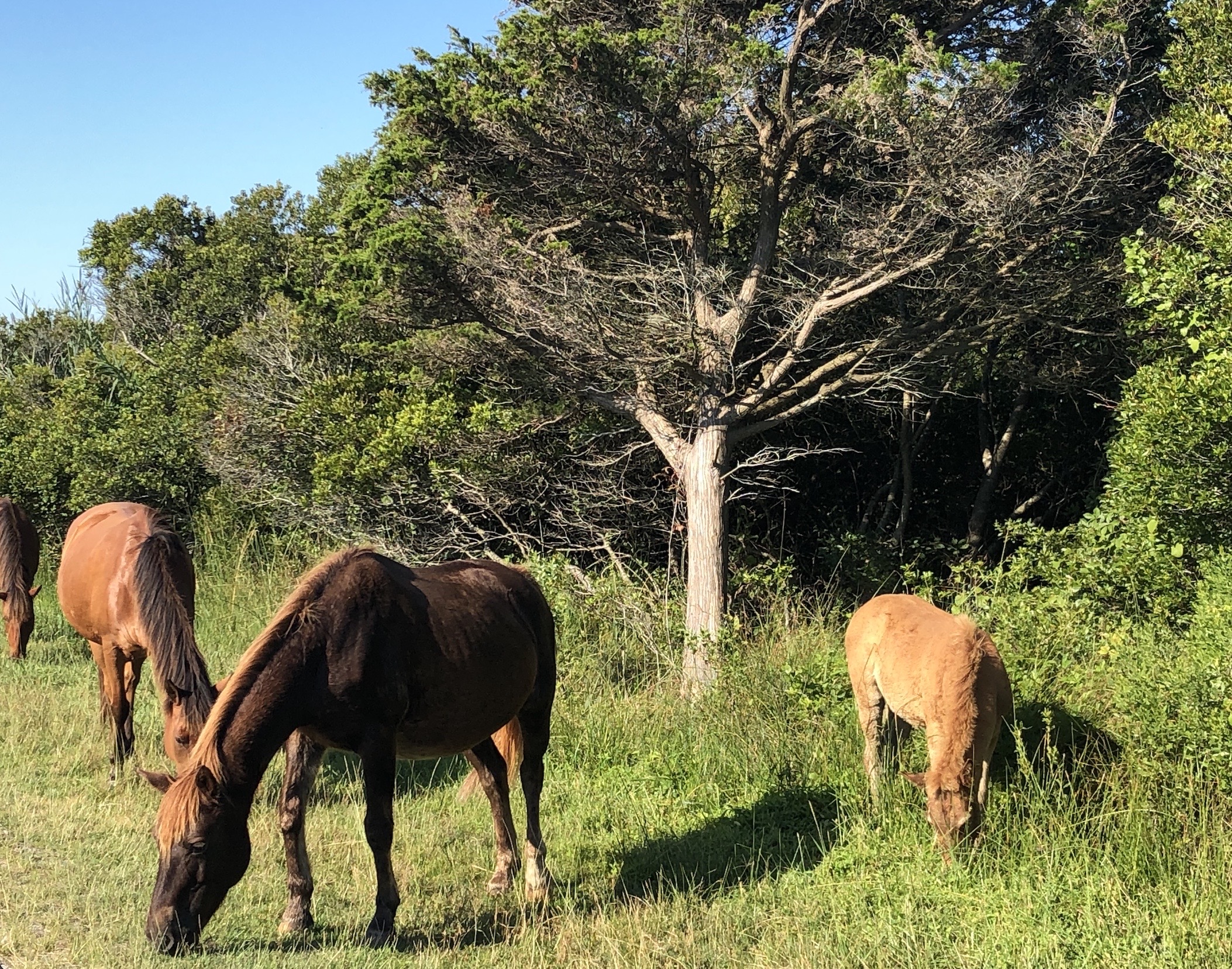
By working with nature and allowing your horse to forage in a healthy, nutritional grass pasture you are promoting a healthy digestive system and maintaining a healthier, happier horse.
As a follow-up to this week’s blog, next week I’ll be discussing in more detail a horse’s digestion and what you should know to keep your horse healthy.
Until next week, have a great weekend, and Happy Horses!
This is a great column. Feeding and digestion are major issues for horses because they are designed to spend the bulk of their time eating and digesting what they eat. Teddie mentioned many good reasons for grazing and for putting horses on pasture. One additional benefit that is vitally important is movement – horses eat and walk, eat and walk, eat and walk all day. Walking is very much a part of the mechanism horses use to help digest their food.
Horses can survive if they are kept in a barn and fed hay and a lot of grain, but they will tend to have more digestive problems like colic unless they are given a chance to walk as they graze. Walking helps to stimulate the very active movements of their long digestive system that is necessary to fully absorb the nutrients in the forage they access. I look forward to the next column!
Thank you Bonnie for the additional tip. You are absolutely correct, the movement itself of walking while grazing is very helpful for a horse’s digestion as well as their muscle tone.
Yes, it is very important in spending time watching the horses as they move around and graze. Mine would always be under the trees shading themselves and chose to be in the stall when rain happened. I would watch them for at least an hour while eating just to see if everything seemed to be okay with them.
I enjoy reading your blogs and learning more about what you are doing and what more I can do with mine. Thank you again and take care. I hope to read more next week.
Thank you, Connie. That sounds so relaxing and peaceful while watching your horses graze.
This was a really interesting article. Thanks so much.
Interesting email. My Arabian is pasture boarded. A couple of times in the last year, he’s had a stall at night, mostly because that was the only boarding available. But he is a pasture horse – he’s never done well being confined.
Last place, they stalled him and 2 other horses as the rains had soaked the grounds (several days’ worth), so they decided to ‘air’ the pastures – one at a time. Mine was a basket case being confined with the rest out. Yeah, pulled him out of there (I had told them he’s a pasture horse and needs to be out, so this wasn’t good). My boy wants to play and run, even at his age. In a stall, he goes nuts.
Mine prefer to be out in a pasture as well. They love to run around and be free to graze as they please.